
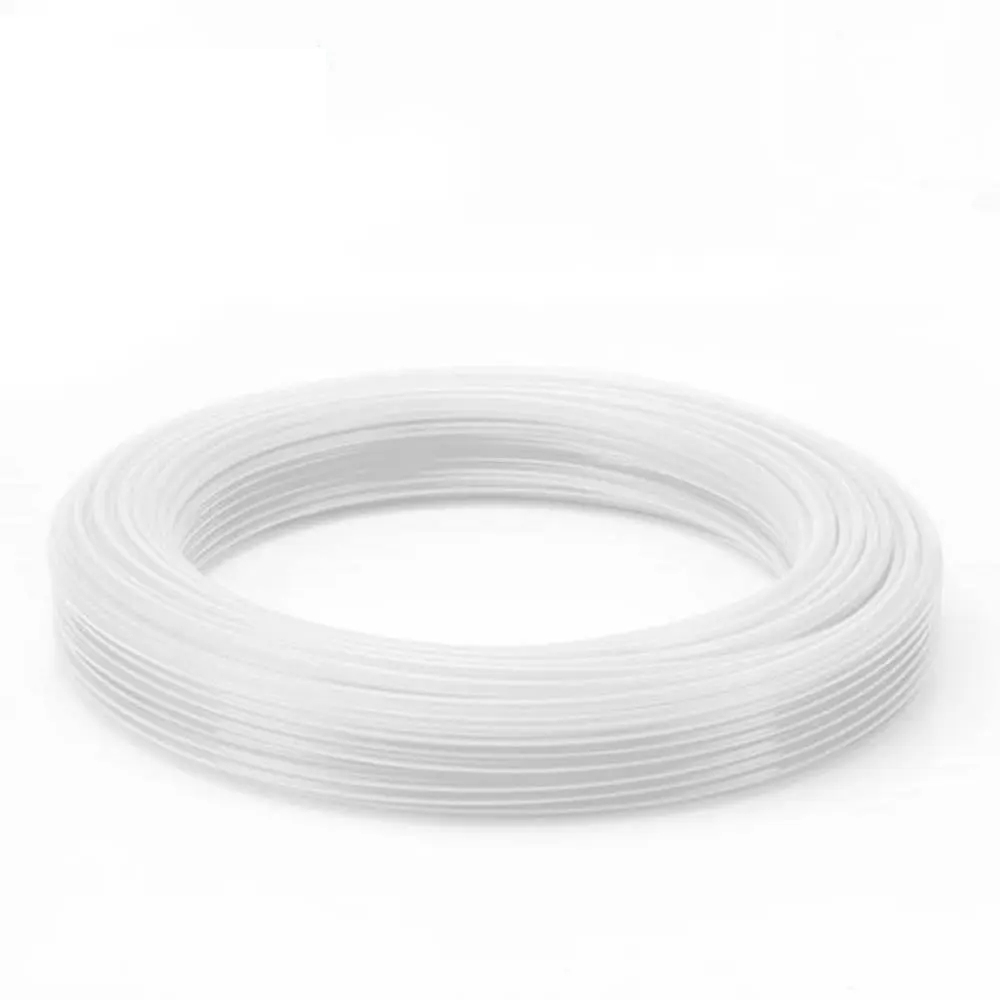
Tubing dimensions
State OD, ID or wall thickness, length or coil size, tolerance, color and total quantity.
PFA fluid handling guide
PFA tubing and fittings require more than a nominal tube size. Define the complete fluid path, operating conditions, cleanliness expectation and item-by-item quantity.
Quick answer
Begin with tube OD and wall or ID, then identify every fitting type, equal or reducing connection, thread, panel-mount requirement and packing expectation. Final pressure, temperature and cleanliness claims require grade- and order-specific confirmation.
State OD, ID or wall thickness, length or coil size, tolerance, color and total quantity.
List union, elbow, tee, connector or panel-mount type with tube OD, thread standard and quantity by item.
State purity, cleaning, sealing, bagging, labeling and traceability expectations before quotation.
RFQ workflow
Prepare a line list, sketch or bill of materials showing tubes, ports, fittings and reducers.
Provide chemical media, temperature range, pressure or vacuum, flow conditions and cleaning cycle.
Describe purity, particle, packaging, labeling and document requirements without assuming a standard.
Check flare preparation, compatible tube size, thread standard, panel thickness and installer requirements.
Evidence status
Confirmed: product families and RFQ fields shown on this website. Highly likely: the listed material families may be relevant to the described application. To verify: final grade, dimensions, performance, compliance, inspection, MOQ and lead time for the specific order.